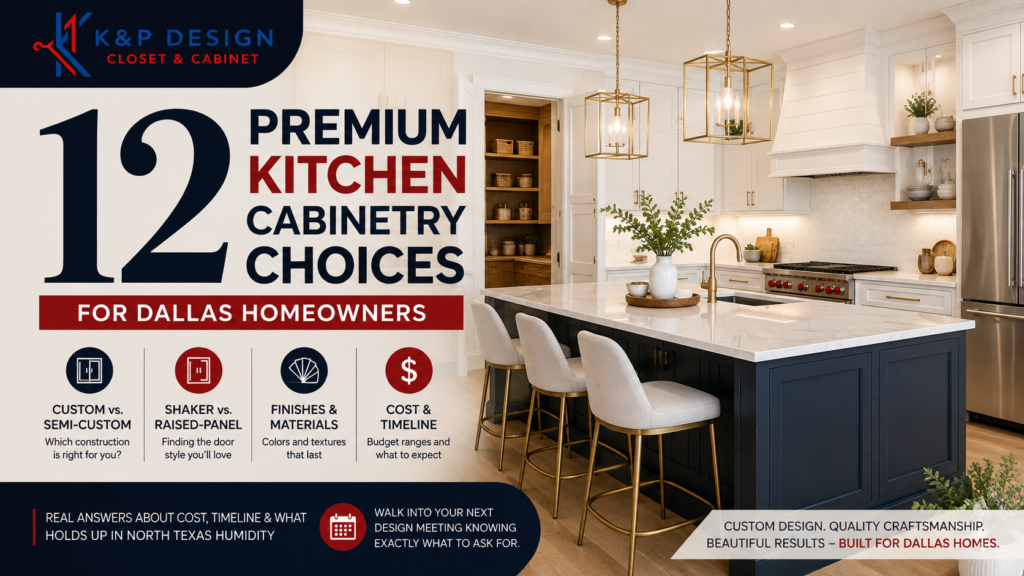
If you’ve started shopping for Kitchen Cabinets in Dallas, you already know the options can feel endless. Custom or semi-custom. Shaker or raised-panel. Painted or stained. Framed or frameless. Every choice affects your budget, your timeline, and how your kitchen will look and function for the next 15 to 20 years.
This guide walks through 12 premium cabinetry choices that Dallas homeowners weigh most often, in plain language, without the showroom sales pitch. By the end, you’ll know which combination fits your home, your family, and your remodeling budget.
Why Cabinetry Choice Matters More Than Almost Anything Else in a Kitchen Remodel:
Cabinets typically account for 30 to 40 percent of a full kitchen remodel budget, more than countertops, appliances, and flooring combined. They also do the most visual work in the room. Countertops and backsplashes get noticed, but cabinets set the tone for the entire space.
Getting this decision right the first time matters even more in North Texas. Dallas homes deal with humidity swings, sun exposure through large windows, and temperature shifts between summer and winter that put real stress on wood and finishes. A cabinet system that looks great in a showroom in Minnesota may not hold up the same way in a Dallas kitchen. That’s part of why working with a design team that knows the local climate and local building stock, from 1960s ranch homes in Lake Highlands to new construction in Frisco, makes a real difference.
Custom vs. Semi-Custom Cabinetry: The First Decision:
Before you pick a door style or finish, you need to decide on the construction category. This is the single biggest factor in both price and lead time.
1. Full Custom Cabinetry
Full custom cabinets are built to the exact dimensions of your kitchen, with no standard sizing constraints. Every box, drawer, and filler piece is made specifically for your space.
This is the right choice if your kitchen has unusual angles, a non-standard ceiling height, or you want features like a built-in appliance garage, a custom wine rack, or cabinetry that wraps around a structural column. It’s also the slowest and most expensive route, with lead times often running 8 to 14 weeks depending on the shop’s backlog.
2. Semi-Custom Cabinetry
Semi-custom cabinets start from a manufacturer’s existing box sizes but allow you to modify dimensions, add specialty inserts, and choose from a wider range of finishes and door styles than stock lines offer.
For most Dallas kitchens, this is the sweet spot. You get real flexibility on layout and style without paying full custom pricing or waiting three months for delivery. If you’re searching for semi-custom kitchen cabinets Dallas homeowners tend to land on this option most often because it balances cost, timeline, and design freedom.
3. Stock Cabinetry, Upgraded
Stock cabinets come in preset sizes and a limited number of finishes, but that doesn’t mean they have to look basic. Pairing stock boxes with upgraded hardware, a furniture-style hood, and thoughtful layout planning can produce a kitchen that looks far more expensive than the price tag suggests. This is a smart option for rental properties, secondary kitchens, or homeowners working with a tighter timeline before a sale.
Door Style Choices: Shaker, Raised-Panel, and Beyond:
Once you’ve settled on a construction category, the door style is what defines the kitchen’s personality. Here are the styles Dallas homeowners request most.
4. Shaker-Style Doors
Shaker doors have a flat center panel framed by a simple, square-edged border. The style traces back to 18th-century Shaker furniture makers who valued function over ornamentation, and it has stayed popular for the same reason: it works in almost any home, from a 1980s Plano colonial to a new-build modern farmhouse in Southlake.
Shaker remains the most requested cabinet door style nationally, and Dallas is no exception. It photographs well, resells well, and pairs with nearly any countertop or hardware finish.
5. Raised-Panel Doors
Raised-panel doors have a center panel that’s milled to sit higher than the surrounding frame, creating a three-dimensional, sculpted look. This style reads as more traditional and formal, and it’s a common choice in larger, more ornate Dallas homes in neighborhoods like Preston Hollow and Highland Park.
Raised-panel doors cost more to produce than shaker because of the extra milling involved, and they can be harder to keep clean since the recessed grooves collect dust and grease. If you love the look but want easier upkeep, ask your cabinet maker about a softened raised-panel profile with fewer deep grooves.
6. Flat-Panel (Slab) Doors
Flat-panel or slab doors have no frame or raised detail at all, just a single flat surface. This is the go-to choice for modern and contemporary Dallas kitchens, especially in newer builds in Uptown and Design District condos where clean lines are the priority.
7. Beadboard Cabinetry
Beadboard adds vertical grooved detailing to the door or end panels, giving a cottage or coastal feel. It shows up often in Dallas kitchens aiming for a farmhouse look, usually paired with shaker doors on the main cabinet runs and beadboard reserved for an island or a hutch-style piece.
8. Inset Cabinetry
Inset doors sit flush within the cabinet frame rather than overlapping it, similar to a well-fitted drawer in a piece of fine furniture. This construction method requires tighter tolerances and more skilled labor, which makes it one of the more premium options on this list. It’s a favorite for homeowners who want a furniture-grade, custom-built look rather than a mass-produced feel.
Finish and Color Choices That Define the Room:
9. Painted Finish Cabinets
Painted cabinets, especially in white, soft gray, and increasingly deep navy or sage green, remain the most requested finish across Dallas kitchen remodels. Paint hides grain variation for a clean, uniform look and works well with almost any hardware or countertop pairing. The tradeoff is that painted finishes show scratches and chips more visibly than stained wood, so factor in a durable topcoat when you’re comparing quotes.
10. Stained Wood Finish Cabinets
Stained cabinets showcase the natural grain of the wood, whether that’s oak, maple, cherry, or hickory. Stains have moved toward warmer, lighter tones over the past few years, moving away from the dark cherry finishes that were popular in Dallas kitchens in the early 2000s. Stained cabinets tend to hide daily wear better than paint, which makes them a practical choice for busy households.
11. Two-Tone Cabinet Combinations
Two-tone kitchens pair a different color or finish on the island than on the perimeter cabinets, or use a contrasting color on upper versus lower cabinets. This has become one of the most-requested design choices in newer Dallas remodels because it adds visual interest without committing to an all-over bold color.
Specialty Features Worth Considering:
12. Framed vs. Frameless Construction
This is a structural choice that affects both style and storage. Framed cabinets have a face frame across the front of the box, which is the traditional American construction method and generally the more budget-friendly option. Frameless (also called full-access or European-style) cabinets skip the face frame, which opens up slightly more usable interior storage and gives doors a cleaner, more contemporary look when closed.
Neither is objectively better. Framed construction tends to be sturdier over decades of use and is easier to source in classic styles like raised-panel. Frameless construction maximizes storage and suits modern slab-door kitchens. A good design consultation should walk through both before you commit.
How to Choose the Right Combination for Your Dallas Kitchen:
With 12 options on the table, narrowing things down comes back to three practical questions:
What’s your budget ceiling? Full custom with raised-panel doors and inset construction sits at the top of the price range. Semi-custom shaker cabinets in a painted finish deliver most of the same visual impact for meaningfully less money.
How long can the project take? If you’re working around a listing date or a holiday deadline, semi-custom or upgraded stock cabinetry will move faster than full custom.
What’s the resale picture? Shaker doors and painted finishes have the broadest buyer appeal if you plan to sell within the next five to seven years. More ornate raised-panel and stained wood finishes tend to appeal to buyers who want a traditional, established look and plan to stay long term.
Working through a design consultation for kitchen cabinets in Dallas with samples in hand, rather than relying only on photos online, makes this decision far easier. Wood grain, paint sheen, and door profile all look different in your kitchen’s actual lighting than they do on a screen.
Common Mistakes Dallas Homeowners Make When Choosing Cabinets:A few patterns show up again and again in remodel consultations. Homeowners choose a door style based on a photo from a much larger kitchen, without accounting for how the same profile will look in a smaller galley layout. Others prioritize the lowest quote without asking what material the boxes are made from, plywood construction holds up significantly better than particleboard in humid conditions. And some skip requesting a physical door sample entirely, then are surprised when the in-person color reads warmer or cooler than expected.
Asking your cabinet provider for a full sample board, not just a paint chip, before signing off on an order is one of the simplest ways to avoid a costly redo.
Materials and Standards Worth Asking About:
If indoor air quality matters to your household, ask whether the cabinet boxes meet CARB Phase 2 or TSCA Title VI formaldehyde emission standards, which limit off-gassing from engineered wood products. The EPA’s guidance on formaldehyde emissions explains what these standards cover and why they matter in a room where you spend a significant part of your day. It’s also worth reviewing general kitchen planning guidelines from the National Kitchen & Bath Association if you want an unbiased reference point on layout and storage standards before your first design meeting.
Ready to Compare Your Options in Person?
Photos and product pages only tell part of the story. The best way to decide between shaker and raised-panel, or custom and semi-custom, is to see and touch real samples in a showroom, matched against your own kitchen’s cabinets, countertops, and lighting.
Schedule a free design consultation with our Dallas cabinetry team, or browse our gallery of completed kitchen cabinet projects for real examples of these 12 styles installed in homes across the Dallas-Fort Worth area.
Frequently Asked Questions:
- What is the difference between custom and semi-custom kitchen cabinets? Ans: Custom cabinets are built entirely to your kitchen’s exact measurements with no size restrictions, while semi-custom cabinets start from a manufacturer’s standard box sizes with some flexibility for modifications. Custom costs more and takes longer, but semi-custom covers most layout needs at a lower price point and shorter lead time.
- How much do custom kitchen cabinets cost in Dallas? Ans: Pricing varies widely based on materials, door style, and kitchen size, but full custom cabinetry generally runs higher than semi-custom or stock options because of the labor and lead time involved. Getting a quote based on your specific kitchen layout is the only reliable way to know your real number.
- What is the difference between shaker and raised-panel cabinet doors? Ans: Shaker doors have a flat center panel with a simple square frame, giving a clean, versatile look that fits both modern and traditional kitchens. Raised-panel doors have a center panel milled to sit higher than the frame, creating a more formal, dimensional look that costs more to produce.
- How long does it take to install new kitchen cabinets in Dallas? Ans: Installation itself typically takes a few days to a week once cabinets arrive, but the full timeline includes design, ordering, and manufacturing lead time. Semi-custom cabinets often arrive in 4 to 6 weeks, while full custom orders can take 8 to 14 weeks depending on the shop.
- Are semi-custom cabinets a good value for Dallas homeowners? Ans: For most kitchens, yes. Semi-custom cabinets offer enough flexibility in sizing, door style, and finish to handle common layout challenges without the cost or wait time of full custom work, which is why they’re the most common choice among Dallas remodels.
- What cabinet finish holds up best in the Texas climate? Ans: Stained wood finishes and durable painted finishes with a hard topcoat both perform well, but plywood box construction matters more than the surface finish when it comes to handling North Texas humidity swings. Ask your cabinet provider about box material before focusing on color.
- Should I choose framed or frameless cabinet construction? Ans: Framed cabinets are typically more budget-friendly and pair naturally with traditional door styles like raised-panel, while frameless construction offers slightly more interior storage and suits modern, slab-door kitchens. The right choice depends on your kitchen’s style direction and storage needs.