
Most custom closet projects stall out at the same finish line. The shelves get built, the rods get hung, the bins go in, and then the project quietly ends before anyone addresses the things that actually make a closet or mudroom feel finished: the lighting, the door, the hardware, the little accessories that turn a storage box into a room you enjoy walking into.
We work with a lot of Richardson, TX homeowners who already know what type of closet they want. What they usually have not thought through yet is everything past that decision. This guide covers 21 accessories, lighting choices, and door options for custom closets and mudrooms that go beyond the basic build, along with which ones are worth prioritizing if your budget does not stretch to all 21 at once.
None of this requires starting from scratch. Most of the items below can be added to a closet or mudroom that is already built, which is good news if you are happy with your current layout and just want it to function and feel better. We will flag which upgrades are easy retrofits and which ones work best when planned in from the start, so you can decide what fits this year’s budget versus next year’s.
Why the finishing touches matter more than people expect
A closet with good shelving and bad lighting still feels unfinished, even if every inch of storage is accounted for. The same goes for a mudroom with a great bench and lockers but a flimsy door that lets every draft from the garage straight into the house. These details get skipped because they are usually the last items on a project list and the first things cut when a budget tightens, which is a shame, because they are often the cheapest pieces on the entire job relative to how much they change the daily experience of the space.
If you have not yet decided on a closet type or layout, we have covered that ground already in our guide to custom closet types in Richardson, and our mudroom versus custom closet comparison is a good starting point if you are still weighing the two. This guide picks up after that decision is made.
Closet and mudroom lighting:
1. LED strip lighting along shelf edges. Mounted under the lip of each shelf, this lights the shelf below it without creating a visible fixture, and it is one of the most requested upgrades on any custom closet quote we write.
2. Motion-activated closet lights. A small sensor that turns the light on when the door opens and off a minute or two after you leave is a small convenience that homeowners tend to miss once they have lived without it in a previous house.
3. Toe-kick or floor-level LED lighting. Useful in a walk-in closet with low ambient light, and especially helpful for anyone getting dressed before sunrise.
4. Puck lights inside drawers and cabinets. Small battery-powered or hardwired puck lights inside a deep drawer or a dark cabinet make it much easier to find smaller accessories like jewelry or ties.
5. Overhead fixtures on a dimmer. A single ceiling fixture is fine for a small reach-in closet, but anything larger benefits from dimmable overhead light so the room does not feel like a stockroom.
6. Backlit mirror or vanity lighting. If your custom closet includes a dressing area, a backlit mirror adds flattering, even light that a single overhead bulb cannot match. According to the U.S. Department of Energy, LED fixtures use far less energy and run far longer than older bulb types, which matters here since closet lights are often left on longer than people realize.
Doors and entry hardware:
7. Barn-style sliding doors. A strong choice for mudrooms and larger walk-in closets where a swinging door would eat into usable floor space. They also tend to read as a design feature rather than a plain utility door.
8. Frosted or frameless glass doors. Popular for walk-in closets that double as part of the bedroom’s visual design, since they let light through without fully exposing the contents.
9. Bifold doors with soft-close hardware. A practical, budget-conscious option for reach-in closets, especially once upgraded with a soft-close mechanism so they stop slamming.
10. Mudroom doors with a built-in boot scraper or weather seal. If your mudroom connects to the garage or backyard, a door with a proper weather seal and a boot scraper tray at the base keeps dirt and moisture from migrating into the rest of the house.
11. Matte black or brushed brass hardware. Door pulls, hinges, and hooks finished in matte black or brushed brass are showing up constantly in 2026 closet and mudroom projects, and they are an easy way to tie the space into the rest of a home’s hardware finishes.
Organization accessories:
12. Pull-out valet rods. A small rod that extends out from the closet system, useful for hanging tomorrow’s outfit or a garment bag without taking up a full section of permanent rod space.
13. Built-in jewelry drawers with felt lining. A shallow, lined drawer purpose-built for jewelry keeps small items from sliding around and tangling, which matters more than it sounds like until you have lived with one.
14. Tilt-out hampers. A hamper that tilts open from a cabinet front instead of sitting as a freestanding bin on the floor keeps a closet looking tidy and uses space that would otherwise be a dead corner.
15. Angled shoe shelving. Flat shelves waste vertical space on shoes. An angled shelf with a small lip at the front holds more pairs in the same footprint and makes them easier to see at a glance.
16. Adjustable shelving and rod systems. Closets that can be reconfigured as your wardrobe changes, rather than fixed at a single height, tend to stay useful for far longer. This is one of the more practical upgrades over a standard fixed-shelf build.
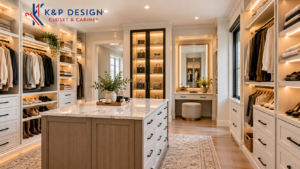
17. Island or center storage units in larger walk-ins. A small island adds drawer storage and a flat surface for folding, and works well in closets with enough floor area to spare.
Mudroom-specific additions:
18. Individual lockers with labeled hooks. For households with kids, assigning a locker to each family member cuts down on backpacks and shoes piling up in one corner.
19. A built-in bench with lift-top storage. A bench seat that doubles as a storage box underneath is one of the most functional single pieces you can add to a mudroom, giving you somewhere to sit while putting shoes on and somewhere to stash the shoes once they are off.
20. Pet feeding and leash storage. A dedicated cubby for leashes, a pull-out drawer for food, and a built-in spot for water bowls keep pet gear from spreading across the whole mudroom floor.
21. A charging and mail drop station. A shallow shelf with a power outlet near the entry door gives everyone a landing spot for keys, mail, and phones, so those items stop accumulating on the kitchen counter instead.
Common mistakes homeowners make with these finishing touches:
The biggest mistake we see in Richardson closet and mudroom projects is choosing lighting and hardware finishes at the very end, almost as an afterthought, after every other decision has already been locked in. That order tends to produce mismatched results, like brushed nickel hooks next to matte black hinges, simply because each item got picked separately instead of as part of one finish plan. It is worth choosing your hardware finish, whether that is matte black, brushed brass, or something else, before you start shopping for individual pieces, so everything from the door pull to the light switch plate matches.
A second common mistake is underestimating how much daily traffic a mudroom door and bench actually take. A door hinge rated for an interior bedroom closet is not built for a door that gets opened fifteen times a day by kids coming in from the backyard. If your mudroom connects directly to a garage, exterior entry, or backyard, it is worth asking specifically for hardware rated for higher-traffic, higher-moisture use rather than assuming standard interior hardware will hold up the same way.
The third mistake is adding lighting without a plan for where the switch or control goes. A beautiful LED shelf light that requires reaching to the very back of a deep closet to turn on gets used far less than one wired to a switch by the door or set up with a motion sensor. Think through how you will actually turn the light on and off before the wiring is finalized, not after.
Budgeting and priority order:
If you can only tackle a handful of these this year, lighting and hardware upgrades give you the most visible change for the least money, since they can usually be added to an existing closet system without rebuilding it. Doors come next, particularly if your current door is damaged, swings the wrong direction, or lets in drafts. Mudroom-specific items like lockers and a lift-top bench matter most for households with kids or pets, and are worth prioritizing over purely cosmetic closet upgrades if your mudroom sees daily traffic.
For general inspiration on layout and storage before you commit to specific accessories, Houzz’s storage idea galleries are a reasonable place to browse, and the U.S. Department of Energy’s page on LED lighting is worth a look if you are deciding between lighting options for a closet that stays on for long stretches.
How KP Closet and Cabinet Design helps Richardson homeowners:
We build these finishing touches into Richardson closet and mudroom projects as part of the same design process we use for kitchens, starting with a free in-home or phone consultation and a 3D design so you can see the lighting layout, door style, and accessories in place before anything is built. If your closet or organizer system already works but needs these final touches, that is a much smaller project than a full rebuild, and it is one we handle often. You can reach our team at (214) 892-0044, or browse our kitchen and closet cabinetry services to see the full scope of what we design and install across Dallas and Richardson.
Frequently Asked Questions:
What is the most affordable way to upgrade an existing custom closet without rebuilding it?
LED shelf lighting and updated door or drawer hardware deliver the biggest visible change for the smallest cost, and both can usually be retrofitted into a closet system that already has its shelving and rods in place.
Do mudrooms need different accessories than a standard custom closet?
Yes. Mudrooms see more daily traffic, dirt, and moisture than a bedroom closet, so additions like a boot scraper, weather-sealed door, lift-top bench, and individual lockers matter more there than purely cosmetic upgrades like glass doors or a backlit mirror. A closet in a bedroom rarely deals with wet shoes, muddy paws, or a door swinging open a dozen times before breakfast, which is exactly why mudroom hardware and finishes need to be chosen with that heavier use in mind, right down to the type of flooring and the finish on the bench seat.
One more thing worth planning for either space: measure twice before you order hardware or lighting online. Closet and mudroom systems are built to specific depths and widths, and a pull-out valet rod or an LED strip kit sized for a standard big-box closet will not always fit a custom-built system cleanly. A quick check with whoever installed or is installing your closet can save a return shipment and a second trip to install the right part.