
Deep closet shelves offer generous storage capacity, but they come with a frustrating problem: anything pushed toward the back becomes practically invisible and nearly impossible to reach. If you’ve ever bought duplicates of items you already owned simply because you couldn’t see what was hiding in the depths of your closet, you’re not alone. The good news is that with the right organizational strategies and tools, you can transform those deep shelves from cluttered catch-alls into efficient, accessible storage spaces where every item has a home and nothing gets lost in the shadows.
Understanding the Deep Shelf Challenge
Deep shelves—typically 18 inches or more in depth—create unique organizational obstacles. While shallow shelves allow you to see everything at a glance, deep shelves require you to stack items front-to-back, creating layers that obscure your view. Without a proper system, items migrate to the back, get forgotten, and waste both space and money.
The key to conquering deep shelf organization is implementing solutions that either bring the back forward or create clear visibility and access pathways throughout the entire depth.
Install Pull-Out Shelf Systems
One of the most effective solutions for deep closet shelves is installing pull-out sliding shelves or drawers. These systems function like kitchen cabinet organizers, allowing you to pull the entire shelf contents forward with minimal effort.
Sliding Shelf Options
Retrofit sliding shelves are available at most home improvement stores and come in various sizes to fit your existing shelving. These typically mount to the bottom of your shelf and glide on metal runners, bringing everything within easy reach. For DIY enthusiasts, installing these systems requires only basic tools and about 30 minutes per shelf.
Alternatively, rolling bins or baskets with wheels serve a similar purpose at a lower cost. Choose containers that fit the width of your shelf with a few inches to spare, making them easy to slide in and out.
Create Organized Zones with Clear Containers
Transparent storage containers are game-changers for deep shelves because they allow you to see contents without removing everything. Divide your shelf into specific zones based on categories: seasonal items, linens, accessories, or whatever suits your storage needs.
Choose stackable, clear bins with labels on both the front and top. This dual-labeling system lets you identify contents whether you’re looking straight at the shelf or viewing it from above. When selecting container sizes, measure your shelf depth and choose bins that maximize space while leaving enough room to comfortably grip and remove them.
For frequently accessed items, place bins on the front half of the shelf. Reserve back areas for seasonal or rarely used items in clearly labeled containers.
Implement the Lazy Susan Strategy
Lazy Susans aren’t just for kitchen spices—they’re incredibly effective for deep closet shelves, especially corner spaces. These rotating platforms bring items from the back to the front with a simple spin.
This solution works particularly well for smaller items like accessories, toiletries, craft supplies, or cleaning products. Choose a lazy Susan that’s sized appropriately for your shelf depth, leaving a few inches of clearance on all sides for smooth rotation. Multi-tiered lazy Susans maximize vertical space while maintaining accessibility.
Use Shelf Dividers and Risers
Shelf dividers and risers help you make use of vertical space on deep shelves while maintaining organization. Dividers create compartments that prevent items from toppling over or sliding to the back when you remove something from the front.
Risers elevate items in the back row, creating stadium-style visibility where you can see everything at once. This approach works exceptionally well for shoes, folded clothing, purses, or boxed items. You can purchase adjustable shelf risers or create your own using small storage containers or boxes.
The combination of dividers and risers transforms a single deep shelf into a multi-level, compartmentalized storage system where nothing hides in the shadows.
Arrange by Access Frequency
Strategic placement based on how often you use items is fundamental to maintaining an organized deep closet. This principle, often called the “frequency of use” method, ensures that your organizational system works with your habits rather than against them.
Front Zone: Daily and Weekly Items
Reserve the front 6-8 inches of your shelves for items you access at least weekly. This might include everyday shoes, current-season clothing, or frequently used linens.
Middle Zone: Monthly Items
The middle section should house items you need monthly or seasonally—think guest bedding, off-season accessories, or special occasion items.
Back Zone: Rarely Used Items
The deepest part of your shelf is perfect for rarely used items like holiday decorations, memorabilia, or seasonal sporting equipment. Since you’ll only access these occasionally, the extra effort to reach them is acceptable.
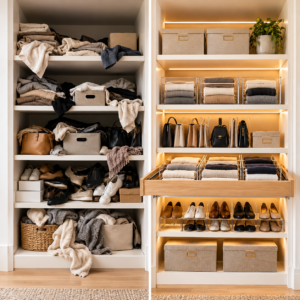
Invest in Stackable Storage Solutions
Stackable bins and boxes designed specifically for closet use create vertical organization on deep shelves. Look for products with interlocking lids or grooved bottoms that prevent shifting and sliding.
When stacking, place heavier, less frequently used items on the bottom and lighter, more commonly accessed items on top. Maintain consistent container sizes within each vertical stack to prevent unstable towers that make accessing bottom items difficult.
Drop-front stackable bins are particularly useful because you can access the contents of bottom containers without unstacking everything above them.
Add Proper Lighting
Even the best organizational system fails if you can’t see what you’re storing. Deep closets often suffer from poor lighting, making back areas especially difficult to navigate.
Install battery-operated LED strips along the front edge of shelves to illuminate contents. Motion-sensor closet lights eliminate the need to fumble for switches. Proper lighting not only helps you find items but also encourages you to maintain your organizational system because you can actually see what you’re working with.
Maintain Your System with Regular Audits
Creating an organizational system is only half the battle—maintaining it requires periodic review. Schedule quarterly closet audits where you pull everything forward, assess what you’re actually using, and reorganize as needed.
During these audits, remove items you no longer need, consolidate partially used containers, and refresh labels as your storage needs evolve. This regular maintenance prevents the gradual slide back into chaos that plagues many organizational efforts.
FAQs
1. How deep is considered a deep closet shelf?
A shelf is usually called deep once it’s 18 inches or more front to back. At that depth, items get stacked in rows, and anything in the back row gets hidden behind what’s in front. That’s why deep shelves need a system that brings items forward or keeps every row visible.
2. What is the best way to organize deep closet shelves?
Pull-out sliding shelves work best because they bring the whole shelf forward with one pull. Add clear labeled bins, risers for back rows and good lighting. Then place items by how often you use them, with everyday items in front and seasonal items in back.
3. How do I stop losing things in the back of my closet shelves?
Make the back visible and easy to reach. Use clear bins labeled on the front and top, risers so back items sit higher, and dividers so stacks don’t slide backward. Keep only rarely used items in the back, and pull everything forward during a quarterly audit.
4. Can I add pull-out shelves to an existing closet?
Yes. Retrofit sliding shelves mount onto your existing shelves and glide on metal runners. A DIY install takes about 30 minutes per shelf with basic tools. Rolling bins or baskets that slide in and out are a cheaper option.
5. Are clear bins better than baskets for deep shelves?
On deep shelves, usually yes. With clear bins you can see what’s inside without pulling everything out, which helps you avoid buying things you already own. Baskets look nice, but they work better on the front of the shelf with clear labels. Clear bins are the better fit for the middle and back zones.
6. What should go on the front, middle and back of a deep shelf?
Keep daily and weekly items in the front 6–8 inches. Monthly or seasonal items like guest bedding and special-occasion pieces go in the middle. Use the back for things you rarely touch, like holiday decor, memorabilia or off-season sports gear.
7. Do lazy Susans work in closets?
Yes, especially on deep corner shelves. One spin brings back items to the front. They’re best for small items like accessories, toiletries, cleaning products and craft supplies. Leave a few inches of clearance on all sides so it turns smoothly, and pick a two-tier model if you have the height.
8. How can I add light to a dark closet without wiring?
Use battery-powered LED strips along the front edge of each shelf, or motion-sensor closet lights that turn on when you open the door. Neither needs an electrician, and both let you see all the way to the back.
9. How often should I reorganize my closet shelves?
Every three months is a good schedule. Pull everything forward, remove what you don’t use, combine half-empty bins and update labels. Short regular check-ins keep the system from sliding back into clutter.
10. Is a custom closet system worth it for deep shelves?
If DIY organizers keep failing, it often is. A custom closet can be built around your space with pull-outs, adjustable shelves and built-in lighting, so you’re not working around an awkward depth. K&P Closet & Cabinet Design offers a free consultation for Dallas-area homeowners who want deep shelves that stay organized.