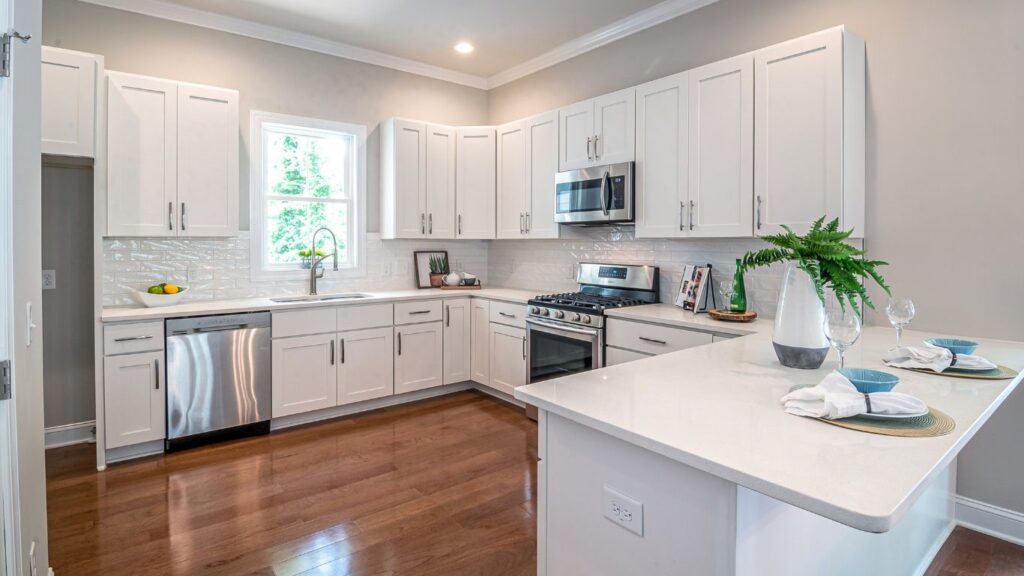
1. WOOD OVERTAKES WHITE — FOR THE FIRST TIME IN NEARLY A DECADE:
For a long time, white kitchen cabinets felt non-negotiable. They photographed well, made small kitchens feel bigger, and matched almost everything. In 2016, white was the dominant choice by a wide margin. It held that position for years.
In 2026, wood finally passed it.
According to the Houzz 2026 Kitchen Trends Study, wood tones are now the top cabinet choice at 29%, edging past white at 28%. That’s a 6-percentage-point jump for wood in a single year — and a 5-point drop for white.
Medium-toned wood leads the pack at 15%, followed by light wood at 11%. Dark wood sits at just 3%, which makes sense: dark cabinets absorb light and demand more maintenance to stay looking clean in a working kitchen.
The reason for the shift isn’t hard to understand. White kitchens, done well, are timeless. But white kitchens done on a budget look flat. Wood brings natural grain, depth, and warmth that doesn’t depend on everything else in the room being perfect.
For Dallas kitchens — where many homes feature warm brick, limestone, and neutral wall tones — wood-tone kitchen cabinets tend to feel organic rather than forced.
If you’re curious what a wood-tone cabinet renovation looks like with quality materials, take a look at KP Closet & Cabinet Design’s kitchen cabinet collection. Their finishes are sourced with durability in mind, which matters in a Texas climate where humidity and temperature swings put cheap materials to the test over time.
2. SHAKER CABINETS ARE STILL THE SAFE BET (BUT SOMETHING ELSE IS COMING):
Shaker-style cabinet doors haven’t gone anywhere. They still account for 58% of all renovated kitchens, according to Houzz, and for good reason — the clean inset frame works with both traditional and contemporary interiors, and it holds its visual appeal at almost any price point.
But flat-panel (slab) doors are gaining ground. At 22%, they’re the clear runner-up, and they’re especially popular in kitchens that pair wood tones with minimal hardware.
What’s interesting is the detail work showing up in mid-range renovations: grooved panels, fluted accents, chamfered edges. Interior designers writing for Homes & Gardens describe this as “artisan detailing” — a phrase that sounds expensive but often adds relatively little to the per-cabinet cost. It’s a way to get texture and visual interest without going full ornate.
If you’re drawn to the classic look of cabinets, KP Closet & Cabinet Design’s Classic Collection covers shaker and traditional profiles that hold their visual appeal across different interior styles. For something sharper and more contemporary, the High Glossy Collection reflects light beautifully in open-plan kitchens and pairs naturally with modern appliances.
3. THE COLOR STORY FOR 2026: LESS BRIGHT WHITE, MORE WARMTH:
White cabinets aren’t disappearing — they’re softening. The crisp, cool white that defined kitchens in the early 2010s is giving way to warmer tones: cream, warm putty, oatmeal, mushroom. Off-white still sits at 15% in the Houzz survey, which is a steady position, just a quieter version of what white used to be.
Two-tone cabinets are worth paying attention to. Homeowners often keep the upper cabinets in a lighter shade — white or off-white leads at 40% for uppers — while the lower cabinets go darker or bolder. Wood tones claim 37% of lower cabinet finishes, followed by blue (19%) and green (14%).
This upper-light, lower-dark approach does a few practical things: it grounds the kitchen visually, hides splashes and scuffs better on the lower section, and breaks up a long run of cabinets that might otherwise feel monotonous.
For Dallas kitchens that get strong afternoon light, this pairing works especially well. Warm wood flowers absorb sun without washing out, while lighter uppers keep the space from feeling heavy.
CultureMap Dallas noted in their coverage of the Houzz 2026 Kitchen Trends that local homeowners tend to prioritize functionality in remodels — which aligns with the two-tone trend, since it lets homeowners address the practical reality that lower cabinets see more wear and tear while still making a design statement.
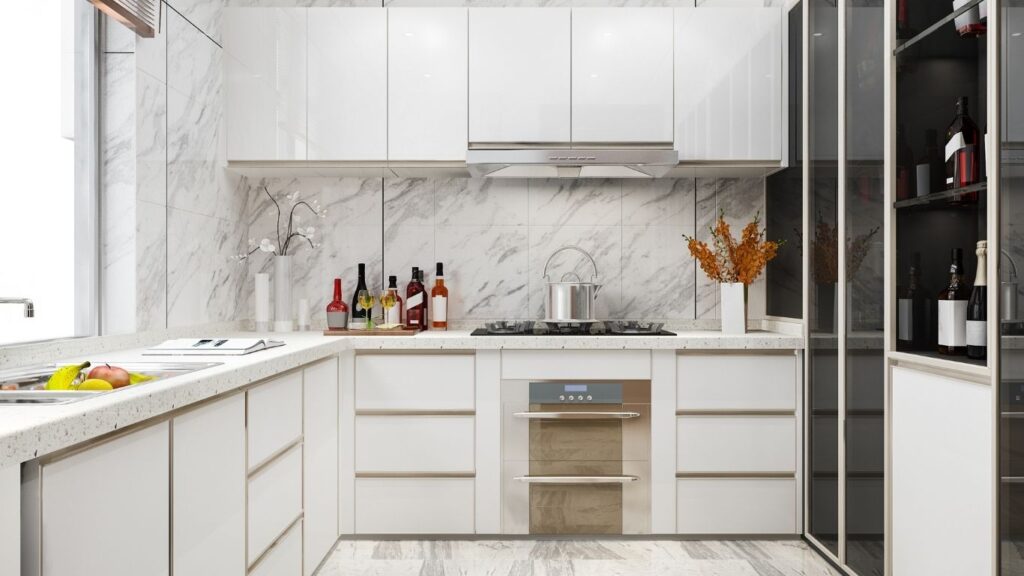
4. STORAGE-FIRST THINKING IS REWRITING CABINET DESIGN:
One of the clearest changes in 2026 kitchen design isn’t about color or door style — it’s about what’s inside the cabinet. Homeowners are asking more from their storage, and they’re willing to plan around it.
The features that come up most often in renovation conversations: pull-out spice racks, tray dividers, appliance garages, built-in trash and recycling drawers, soft-close hardware, and drawer organizers. These aren’t luxury upgrades anymore. They’re standard expectations in any serious kitchen cabinet project.
Vertical space is another major focus. Floor-to-ceiling cabinets let a kitchen use every square foot of wall without adding clutter to countertops. In open-plan layouts — common in Dallas new builds and renovated homes alike — tall cabinets create a built-in look that gives the kitchen a finished, intentional quality rather than a collection of separate elements.
This is where custom and semi-custom kitchen cabinets pull ahead of stock options. A big-box store cabinet doesn’t adapt to your specific wall dimensions or ceiling height. A custom build does, and in kitchens where even six inches matters — near doors, around windows, in galley-style layouts — that difference is real.
5. SUSTAINABLE MATERIALS ARE MOVING FROM NICE-TO-HAVE TO EXPECTED:
Environmental considerations used to show up in renovation decisions occasionally. In 2026, they’re part of the baseline conversation.
Homeowners are asking about engineered wood that performs as well as solid hardwood but uses less raw material. Low-VOC finishes are becoming standard because they’re better for indoor air quality — a concern in Texas, where homes are often sealed tight for air conditioning through long, hot summers. Responsibly sourced hardwoods are appearing in more product specifications and cabinet warranties.
This isn’t purely an ethical shift. Sustainable materials often mean better durability. Low-VOC finishes don’t yellow the way older lacquers did. Engineered cores resist warping better than some solid woods in high-humidity environments.
When evaluating kitchen cabinets in Dallas, it’s worth asking your provider specifically about the materials used, not just the visible finish. The surface tells you about aesthetics. The box construction tells you about how long the cabinets will actually hold up.
6. WHAT ALL THIS MEANS FOR YOUR DALLAS KITCHEN
Dallas kitchens face some specific conditions that national trend reports don’t always account for.
Heat and humidity cycling between spring and summer can stress lower-quality materials. Many Dallas homes have open-plan layouts that make the kitchen visible from a larger portion of the living space. And the Dallas real estate market remains active, meaning your renovation has both a lifestyle benefit and a resale consideration worth factoring in.
The 2026 trends line up reasonably well with what works here. Warm wood tones feel at home alongside Texas architectural materials like brick and limestone. Storage-focused design makes sense in larger homes where the kitchen functions as a working hub. Durable, well-finished materials hold up better over decades in a climate that tests them.
KP Closet & Cabinet Design serves Dallas homeowners with custom cabinet solutions built from quality, American-sourced materials. They offer free in-home or phone consultations and provide a 3D model of your kitchen before production begins — so you see exactly what you’re getting before anything is built.
If you’ve been considering an upgrade, there’s a practical case for acting now rather than waiting until peak season. Lead times for custom cabinetry in high-demand Dallas tend to extend in spring. Getting your project on the schedule in early 2026 puts you ahead of that crunch.
KP Closet & Cabinet Design serves Dallas, TX and surrounding areas with custom kitchen cabinet solutions built from quality, American-sourced materials. Schedule a free consultation — in-home or by phone.
Explore your kitchen cabinet options here
FAQs:
What kitchen cabinet color is most popular in Dallas in 2026?
Wood tones — particularly medium-toned wood — lead nationally in 2026, and that holds in Dallas where warm, earthy materials complement the region’s architectural palette. Warm off-whites and two-tone combinations (lighter uppers, wood or darker lowers) are also common choices.
Are shaker cabinets still in style in 2026?
Yes. Shaker-style doors remain the most common cabinet choice at 58% of renovated kitchens. They’re versatile enough to work in traditional and modern kitchens, and they tend to hold their value well in resale.
How long does a kitchen cabinet installation take in Dallas?
For most kitchens, the installation itself takes half a day to a full day. Larger projects may run two days. Production lead time before installation varies — custom cabinets typically require 8 to 14 weeks from order to delivery.
Is 2026 a good year to invest in kitchen cabinets in Dallas?
The combination of an active resale market and longer lead times in high-demand seasons makes earlier planning the smarter move. Waiting until spring typically means competing with a larger pool of renovation projects for contractor and installation time.
What’s the difference between stock, semi-custom, and custom kitchen cabinets?
Stock cabinets come in fixed sizes from a limited set of finishes. Semi-custom lets you modify dimensions within preset increments and choose from a wider range of door styles. Full custom cabinets are built to exact specifications — any size, any profile, any finish — with no preset limitations on configuration.