
KP Design Journal · Dallas / Richardson
Kitchen Cabinet Showroom in Richardson: A Realistic Budget Breakdown
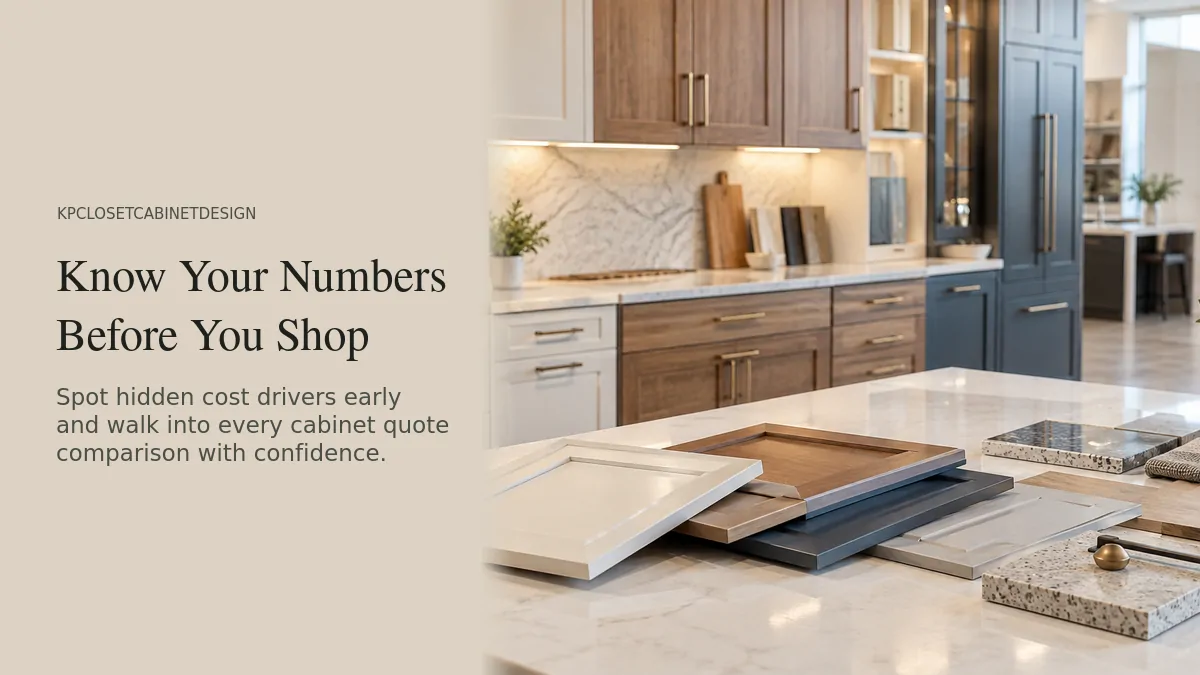
Before you visit a kitchen cabinet showroom in Richardson, learn which line items drive your cabinet budget, where costs tend to creep in, and how to compare quotes fairly.
Planning note: prices and promotions mentioned in this article reflect its original publication. Request a current itemized quote for your layout, materials, availability, and installation scope.
To plan a realistic budget for a kitchen cabinet showroom visit in Richardson, start with your total project number and divide it into six categories: cabinet boxes, doors and finishes, hardware and accessories, under cabinet lighting, installation, and a contingency reserve. Then shift those shares toward the categories that matter most to you. For example, you might move money from accessories to finishes, or from finishes to sturdier boxes. Write down your final split and bring it to your appointment before you look at a single sample door. The illustrative example below offers one possible starting split, but those percentages are planning assumptions, not quotes. This guide explains each category, the tradeoffs that move costs up or down, and the mistakes that commonly inflate quotes. It also shows how to walk into a kitchen cabinet consultation with clear priorities so you can compare options on equal terms.
On this page
Why You Need a Budget Before You Walk In
A showroom deliberately displays its best finishes, most elaborate door styles, and fully loaded interiors. In effect, every display is an advertisement for the top of the product line. That helps you discover options, but it is risky when you have no spending ceiling. Homeowners who arrive at a kitchen cabinet showroom in Richardson with only a vague number often leave with a design built around their favorite display rather than their kitchen's needs. Settling your split first helps you stay focused on your own vision for your home rather than the most impressive sample.
A kitchen cabinet budget does more than limit spending. It tells designers which tradeoffs you are willing to make. You might say, "I care most about storage and durability, and less about ornate doors." A good professional designer can then help direct your money to the features that matter to you, whether you are considering semi-custom or fully custom cabinetry.
Assumption to note: This article does not quote prices. Cabinet costs vary widely with materials, construction method, kitchen size, and layout complexity. Any figure given without seeing your space would be a guess. The percentages here are planning tools, not quotes.
The Six Line Items in a Cabinet Budget
1. Cabinet Boxes (Construction and Material)
The box, or carcass, is the structure that holds everything up. Construction and material quality affect durability, especially near the sink and dishwasher, where moisture exposure is highest. Ask these questions about the boxes:
- What material are they made of?
- How are the joints assembled?
- Are the back panels full and closed, or partial?
Tradeoff: Upgrading box construction is less visible than upgrading doors, but it often matters more for how long the cabinets last.
2. Doors, Drawer Fronts, and Finish
This is where showroom budgets tend to drift. Several choices can change the price significantly:
- Door style
- Wood species or material
- Paint versus stain
- Specialty finishes such as glazing or distressing
Painted finishes in particular involve more labor steps than many homeowners expect.
Decision criteria: Choose the door style you will still like in ten years. Simple profiles such as Shaker-style doors suit both traditional and modern designs. They are often easier to keep clean than heavily detailed doors.
3. Hardware and Interior Accessories
Hinges, drawer slides, pulls, and knobs are the moving parts you touch every day. Soft-close hinges and full-extension slides improve daily use. Interior accessories add function, but each one adds cost. Common examples include pull-out trash bins, spice organizers, tray dividers, and corner solutions.
Common mistake: Choosing every accessory you see in the showroom. Hardware and accessories should solve real problems. List the specific frustrations in your current kitchen, such as no room for sheet pans or a corner cabinet you cannot reach. Then buy accessories that address those problems.
4. Under Cabinet Lighting
Under cabinet lighting is a small line item that changes how a kitchen works. It lights the countertops where you chop and prep. It reduces shadows cast by overhead fixtures. It also makes the finishes you paid for look better at night.
Budget for it at the design stage rather than adding it later. Early planning lets these elements be built into the cabinet design:
- Wiring routes
- Switch locations
- Backsplash outlet placement
- Any light rail or recessed channels
Retrofitting usually means visible cords or extra labor. If funds are tight, prioritize lighting over the main prep zones. With wiring planned up front, the rest can be added later.
Ask the showroom whether lighting is included in the cabinet quote or handled separately by an electrician, because this varies from company to company.
5. Installation
Installation typically covers these tasks:
- Delivery
- Leveling
- Securing cabinets to walls
- Scribing filler panels to uneven walls
- Installing hardware
Older homes in Richardson and the wider Dallas area of Texas may have walls and floors that are out of level, which can add time. Confirm which services are included, such as removal of existing cabinets, haul-away, and minor wall repair. It is also reasonable to ask about the installers' experience with homes like yours.
6. Contingency Reserve
Set aside a reserve for surprises found once old cabinets come out. These can include water damage, plumbing that needs relocating, or outdated wiring. Many remodelers plan for roughly 10–15% of the project as contingency. Treat that as a rule-of-thumb assumption, not a fixed standard.
Illustrative Example: Dividing a Budget
Illustrative example only. This is a hypothetical scenario, not a real customer project or a price quote.
Imagine a homeowner with a mid-sized L-shaped kitchen. They have set a total cabinet budget and want to plan the split before visiting a showroom. One possible breakdown:
| Category | Planning share (hypothetical) |
|---|---|
| Cabinet boxes | ~30% |
| Doors, fronts, and finish | ~25% |
| Hardware and accessories | ~12% |
| Under cabinet lighting | ~5% |
| Installation | ~16% |
| Contingency | ~12% |
In the showroom, the homeowner falls for a hand-glazed finish that would push the doors well past their 25% share. Because they planned ahead, they see the choice clearly and have three options:
- Take the money from accessories.
- Limit the glazing to the island.
- Raise the total budget.
Without the plan, the overage would simply get absorbed and discovered later.
Your own percentages will differ. The point is to set them deliberately.
How to Compare Showroom Quotes Fairly
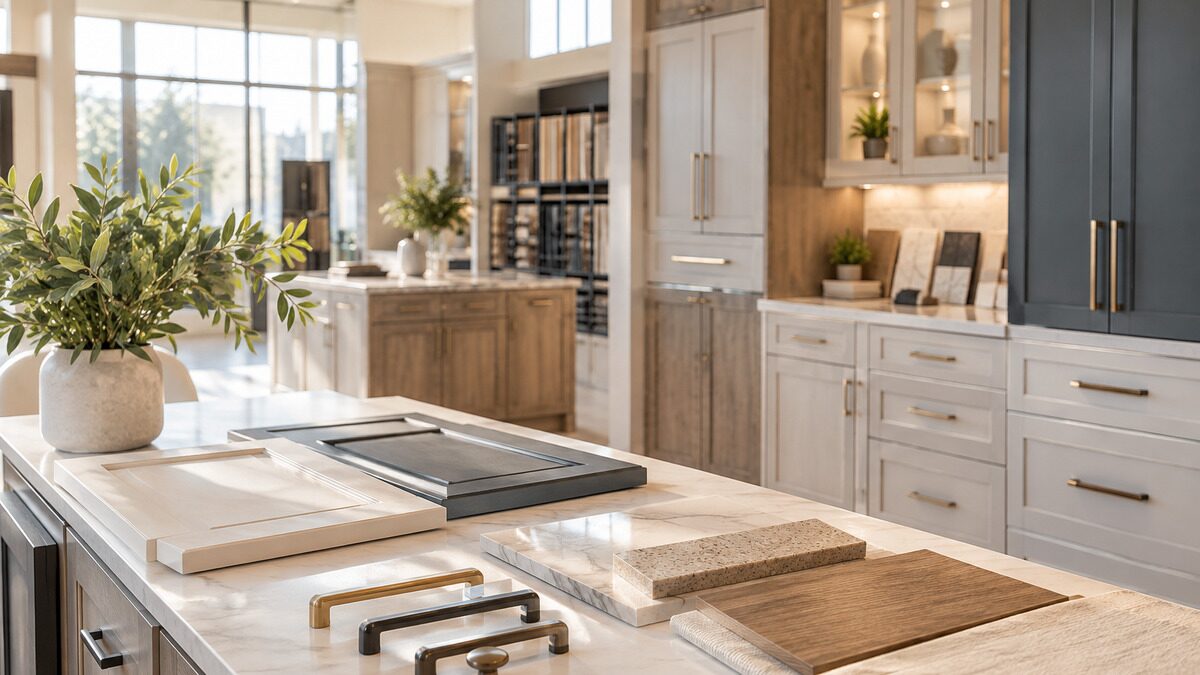
Two quotes can look far apart when they are actually describing different products. To compare cabinet quotes accurately, make sure each quote specifies:
- Box material and construction (not just "wood cabinets")
- Door style, material, and finish type
- Hinge and slide type (soft-close, full-extension)
- Every accessory listed individually
- Whether installation, removal, and haul-away are included
- Whether lighting, crown molding, and filler panels are included
- Estimated lead time
Ask each business to price the same layout and specification. A lower quote that leaves out installation or uses a lesser box is not actually cheaper.
Common Budget Mistakes at a Cabinet Showroom
- Designing around a display instead of your room. A showroom vignette may have ceiling height, island size, or natural light your kitchen does not.
- Forgetting countertops and appliances in the timeline. Countertops are usually measured after cabinets are installed, so cabinet delays push everything back.
- Underestimating tall cabinets and crown molding. Taking cabinets to the ceiling adds storage and visual height, but it also adds material and labor.
- Skipping the measurement review. Confirm appliance dimensions, including door swing and venting, before the order is finalized.
- Treating electrical items as afterthoughts. As covered in the lighting section, decide on lighting and outlets before the design is finalized.
- Blending budgets across rooms. If you are remodeling a bathroom at the same time, keep the bath vanity and storage budget separate from the kitchen numbers. That way, one room does not quietly absorb the other's money.
Stretching Your Budget Without Sacrificing Quality
- Prioritize the boxes and hardware you use daily over decorative upgrades.
- Use a premium finish selectively, such as on an island, while keeping perimeter cabinets simpler.
- Keep the existing layout where possible. Moving plumbing and gas lines adds costs outside the cabinet budget.
- Mix open shelving or glass doors sparingly if they suit your style and reduce cabinet count.
What to Bring to Your Showroom Appointment
Preparation makes a consultation far more productive and helps the designer understand your vision quickly. Check the showroom's hours before you go, since some are closed on certain days or see clients by appointment only. Then bring:
- Rough measurements of your kitchen, including ceiling height and window and door locations
- Photos of your current kitchen from several angles
- Appliance models or dimensions you plan to keep or buy
- Your total budget and your planned category split
- A short list of must-haves and nice-to-haves
- Inspiration photos, with notes on what you like about each
Frequently Asked Questions
Should I tell the showroom designer my real budget?
Yes. Sharing your actual number lets the designer propose a realistic layout and material mix from the start. Otherwise, you may end up revising an over-budget design later. A good designer will use your budget to set priorities, not as a target to hit.
Is under cabinet lighting worth including if my budget is tight?
For most kitchens, yes, because it directly improves countertop visibility where you work. See the lighting section above for how to plan it within a limited budget.
How long should I expect between ordering and installation?
Lead times depend on the cabinet type, the finish, and the showroom's schedule, so ask each one for a written estimate. Build in buffer time, since countertops typically follow cabinet installation and any delay affects later trades.
Can I phase a kitchen cabinet project to spread out costs?
Sometimes. For example, you might install cabinets first and add accessories later. Phasing works best when the later items are accounted for in the initial design. Ask the designer which elements can be safely deferred.
Conclusion: Plan the Numbers, Then Enjoy the Showroom
A kitchen cabinet showroom in Richardson is the right place to see finishes, test drawers, and refine your design. Your budget, however, should be decided before you arrive. Split your total into the six categories, adjust the shares to your priorities, ask for itemized quotes, compare them on matching specifications, and protect your contingency reserve.
Your practical next step is to gather your measurements, photos, and category budget. Then schedule a consultation with kpclosetcabinetdesign to review your kitchen layout and storage priorities with a designer, so every dollar goes toward the features you will use.