Introduction to Kitchen Cabinet Design:
The kitchen is the most used room in your home. It is where mornings start, meals come together, and families spend more time than they often realize. And yet, for most homeowners, the kitchen is also the room that causes the most daily frustration, primarily because of poor cabinet design.
When cabinets are laid out well, the kitchen works effortlessly. When they are not, you are constantly working around the space rather than within it. That difference, between a kitchen that flows and one that fights you, comes down to one thing: thoughtful cabinet design.
This guide is written for homeowners who are past the research phase and ready to make an informed decision. Whether you are comparing materials, choosing between custom and stock cabinets, or narrowing down a style, this is where your planning gets practical.
Why Cabinet Design Matters More Than You Think
Cabinets are not just storage units anymore. They make up roughly 40 to 50 percent of your kitchen’s visual space, which means they define the overall look of the room more than any other element. Beyond aesthetics, they determine how smoothly your kitchen operates. The right cabinet layout reduces steps, eliminates clutter, and makes cooking and cleaning significantly more efficient.
Types of Kitchen Cabinets
Before choosing a style or material, it helps to understand the three foundational cabinet types and what role each one plays.
Base Cabinets sit on the floor and typically run 34 to 36 inches tall. They support the countertop and handle the heaviest storage, including pots, pans, appliances, and pantry items. Most of your daily kitchen activity happens around base cabinets, which makes their layout and internal organization especially important.
Wall Cabinets are mounted above the countertop and are primarily used for items you want within easy reach but off the counter. Glasses, dishes, spices, and dry goods typically live here. Depth and door style both matter a lot with wall cabinets, since a poorly designed wall cabinet can make a kitchen feel cramped even in a large space.
Tall Pantry Cabinets run floor to ceiling and offer the most storage volume of the three. These are particularly valuable in smaller kitchens where floor space is limited. A well-placed pantry cabinet can replace multiple base and wall units while keeping everything organized in one accessible column.
Popular Cabinet Design Styles
The style you choose should reflect both your personal taste and the long-term direction of your home’s design. Here are the three directions most homeowners gravitate toward in 2026.
Modern cabinets prioritize clean lines, flat fronts, and minimal hardware. The focus is on a sleek, uncluttered appearance that makes the kitchen feel open and contemporary. Integrated handles or push-to-open mechanisms are common. Colour palettes tend to run toward whites, deep greys, and matte blacks.
Traditional Cabinet Design
Traditional cabinets feature raised panel doors, decorative moulding, and warmer wood tones. They work particularly well in homes with classic architectural details and give the kitchen a timeless, welcoming character. Hardware is visible and often ornate, with brushed brass or oil-rubbed bronze finishes being popular choices.
Minimalist and Handleless Cabinets
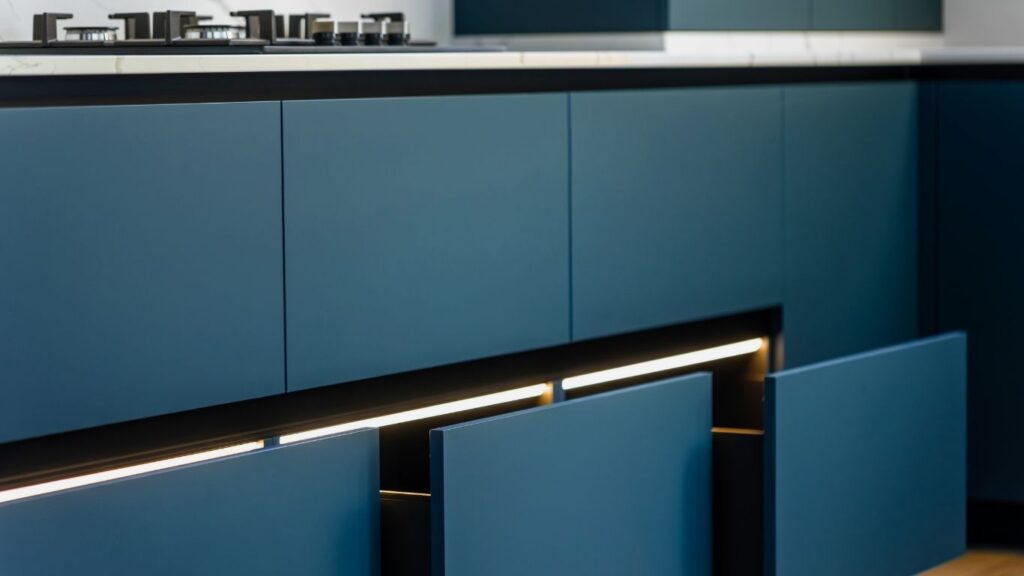
This style takes the modern aesthetic a step further. Handleless cabinets eliminate all visible hardware, creating a seamless surface across the entire cabinet run. Combined with integrated lighting and continuous countertops, minimalist cabinets give the kitchen an almost architectural quality. They work especially well in open-plan homes where the kitchen flows into living spaces.
Custom Cabinets vs Ready-Made Cabinets:
This is one of the most common decisions homeowners faces during a kitchen project, and the right answer depends on a few specific factors.
Ready-made cabinets, also called stock cabinets, come in standard sizes and are available for purchase and immediate delivery. They are significantly less expensive upfront and work reasonably well in kitchens with standard dimensions. The trade-off is limited customization. You are working with fixed sizes, a smaller range of finishes, and interior configurations that may not match how you use your kitchen.
Custom cabinets are designed and built to fit your exact kitchen dimensions, style preferences, and storage requirements. Every detail, including depth, height, interior layout, drawer count, and finish, is specified for your space. This level of precision eliminates the gaps, fillers, and compromises that stock cabinets often require. Custom cabinets also hold their value better over time and are generally built with higher-grade materials.
From a cost perspective, ready-made cabinets typically run between $100 and $300 per linear foot, while custom cabinets range from $500 to $1,200 or more depending on materials and complexity. That gap is significant, but it is important to weigh it against the lifespan difference. A well-built custom cabinet set can last 20 to 30 years, which changes the cost-per-year calculation considerably.
For homeowners with standard layouts and tight renovation budgets, ready-made cabinets are a practical starting point. For anyone with a unique kitchen layout, specific storage needs, or a long-term vision for their home, custom cabinets are consistently the better investment.
Best Materials for Kitchen Cabinets:
Material selection directly affects durability, maintenance, and how your cabinets look over time.
Solid wood remains the benchmark for quality. It is strong, machinable, and can be refinished multiple times over its lifespan. Species like maple, cherry, oak, and walnut each have distinct grain patterns and natural tones. Solid wood does expand and contract slightly with humidity changes, which is why it is typically used for door fronts rather than cabinet boxes in humid climates.
MDF and Plywood are the dominant materials for cabinet boxes. High-quality plywood is strong, resists warping, and holds screws well over time. MDF offers a smoother surface for painted finishes and is often used for painted door fronts. Both are more dimensionally stable than solid wood in cabinet box applications.
Laminate and Thermofoil options have improved significantly. Modern laminates are scratch resistant, easy to clean, and available in a wide range of colours and wood-look patterns. Thermofoil wraps a vinyl film over MDF to create a seamless, moisture-resistant surface. Both are practical choices for high-traffic kitchens where easy maintenance is a priority.
Smart Storage Solutions for Cabinets:
Good storage design is what separates a kitchen that looks organized from one that actually functions that way.
Pull-out drawers inside base cabinets are one of the most impactful upgrades you can make. Instead of reaching into the back of a deep cabinet and moving everything in front to find what you need, pull-out drawers bring the entire contents of the cabinet to you. They work particularly well for pots, pans, and pantry items.
Corner cabinet solutions address one of the most consistently wasted areas in kitchen layouts. Lazy Susans, blind corner pull-outs, and swing-out corner systems all turn awkward corner space into usable, accessible storage. Choosing the right solution depends on your cabinet configuration and what you plan to store there.
Hidden storage systems include toe-kick drawers, integrated spice racks alongside the range, built-in appliance garages, and cabinet interiors with custom organizational inserts. These solutions keep everyday items within reach without cluttering the counter, which is the defining characteristic of a kitchen that feels genuinely well-designed.
Kitchen Cabinet Colour Trends in 2026
Colour choice has a significant impact on how the kitchen feels, and trends in 2026 reflect a move away from the all-white kitchens that dominated the previous decade.
Neutral tones like warm greige, soft sage, and off-white are leading the way. These colours are easy to live with, adapt well to changing decor, and give the kitchen a grounded, organic quality without feeling cold.
Matte finishes continue to grow in popularity over gloss. Matte cabinets do not show fingerprints or water marks as readily, and they give the kitchen a softer, more sophisticated appearance that photographs well and ages gracefully.
Two-tone cabinet designs are one of the more versatile trends in use right now. Pairing a darker lower cabinet color with lighter upper cabinets creates visual depth, makes ceilings feel taller, and allows homeowners to incorporate a bolder color choice without committing to it across the entire kitchen.
How to Choose the Right Cabinet Design
With all of the options available, narrowing down the right choice comes down to three practical considerations.
Kitchen layout considerations come first. The shape of your kitchen, whether it is a galley, L-shaped, U-shaped, or open plan, determines what cabinet configurations are even possible. A design that works beautifully in one layout can feel claustrophobic in another.
Budget planning should be done before you fall in love with a specific material or style. Know your total renovation budget, allocate a realistic percentage to cabinets, and then explore the best options within that range rather than the other way around.
Matching cabinets with interiors means looking beyond the kitchen in isolation. Your cabinet style, color, and hardware should connect visually to the adjacent living spaces, the flooring, and the overall design language of your home. A kitchen that feels cohesive with the rest of the house adds more value than one that feels like a separate showroom.
Cabinet Maintenance and Durability Tips
Even the highest quality cabinets require basic care to perform well over time.
For cleaning, a damp microfiber cloth and a mild dish soap solution handles most everyday grease and residue without damaging the finish. Avoid abrasive sponges and harsh chemical cleaners, especially on painted or laminate surfaces.
Preventing wear and tear starts with the hardware. Soft-close hinges and drawer glides significantly reduce the impact of daily use on cabinet frames and doors. Installing door bumpers on frequently used cabinets adds another layer of protection.
Long-term care includes checking hinges and drawer slides annually and adjusting them as needed. Cabinets near the sink or dishwasher should be inspected periodically for any moisture damage along the cabinet base.
Common Mistakes to Avoid
Overlooking storage needs is the most common and costly mistake in kitchen cabinet design. Most homeowners underestimate how much storage they actually need. Starting with a full inventory of what needs to live in the kitchen, including small appliances, cookware, pantry items, and cleaning supplies, gives you an honest baseline before any design decisions are made.
Poor material selection often comes from prioritizing appearance over performance. A finish that looks stunning in a showroom may not hold up in a kitchen where steam, grease, and daily use are constant factors. Always ask about durability in real-use conditions, not just aesthetics.
Ignoring workflow efficiency means designing a kitchen that looks good but does not cook well. The classic work triangle, the relationship between the refrigerator, sink, and range, should inform where your cabinets are positioned, not the other way around.
Why Invest in Professional Cabinet Design
There is a meaningful difference between choosing cabinets and designing a cabinet system. The former is a product decision. The latter is a spatial problem that requires expertise.
Customization benefits go beyond picking a finish. A professional designer accounts for ceiling height variations, window placements, structural columns, plumbing locations, and the way natural light moves through the space. All of these factors influence which cabinet configurations actually work versus which ones just look good on paper.
Precision and quality matter at every stage, from how joints are constructed to how doors are hung and adjusted. Cabinets that are installed properly on the first attempt do not develop the alignment issues, warping, and wear problems that poorly installed cabinets typically do within the first few years.
Long-term ROI is where professional cabinet design consistently justifies itself. Kitchen renovations return some of the highest home value increases of any home improvement project. A well-designed, professionally installed custom cabinet system contributes directly to that return, both in appraisal value and in the quality of daily life in your home.
Conclusion: Ready to Upgrade Your Kitchen?
Your kitchen cabinets are not just a purchase; they are a long-term decision that affects how you use your home every single day. Getting that decision right means understanding your options clearly and working with a team that can translate your vision into a cabinet system that really fits your space, your habits, and your budget.
K&P Closet & Cabinet Design, based in Dallas, TX and serving homeowners across the United States, specializes in custom kitchen cabinets built with American-sourced materials and installed by experienced professionals. From the first consultation through final installation, the process is designed to be straightforward and collaborative.
Book your free consultation with K&P today at kpclosetcabinetdesign.com or call (214) 892-0044, and take the first step toward a kitchen that works as well as it looks.
FAQs:
- What is the best material for kitchen cabinets?
Solid wood offers the best durability and longevity, particularly for door fronts. High-quality plywood is the preferred choice for cabinet boxes due to its strength and resistance to warping. Laminates and thermofoil are practical for homeowners prioritizing easy maintenance. The right choice depends on your budget, usage patterns, and how long you plan to stay in the home. - How much do kitchen cabinets cost?
Stock cabinets typically range from $100 to $300 per linear foot. Semi-custom options fall between $150 and $650 per linear foot. Fully custom cabinets range from $500 to $1,200 or more, depending on materials and complexity. Custom cabinets deliver better long-term value for unique layouts and homeowners looking for lasting quality. - Are custom kitchen cabinets better?
For most homeowners, yes. Custom cabinets provide a precise fit, better use of available storage space, and significantly more design flexibility. They are especially valuable in kitchens with non-standard dimensions or specific storage requirements that off-the-shelf options cannot accommodate. - What are modern kitchen cabinet trends?
The strongest trends heading into 2026 include handleless flat-front cabinets, matte finishes in warm neutral tones, two-tone upper and lower cabinet combinations, and integrated smart storage solutions like pull-out organizers and hidden drawer systems. - How long do kitchen cabinets last?
With quality materials and proper maintenance, kitchen cabinets can last anywhere from 10 to 30 years. Solid wood and plywood construction with professional installation consistently outperform lower-grade materials in lifespan. Soft-close hardware and routine care extend that lifespan further.